← Travel
Kraj · Država · 12. 07. 2026
Naslov popotniškega zapisa
Podnapis naslovne fotografije
Uvodni odstavek zapisa. Tu opišeš pot, prvi vtis, kako si prišel do kraja. Besedilo lahko urediš kar tukaj — to je le vzorec, ki pokaže ritem strani: besedilo, fotografija, besedilo.
Drugi odstavek. Zgodba se nadaljuje, fotografije jo prekinjajo tam, kjer besede ne zadoščajo.
Podnapis para fotografij
Zaključni odstavek — kaj ostane, kam naprej.
← Back to this and that
06. 08. 2026
Great Photos, Expensive Gear and One Remaining Kidney
In the world of photography, debates about gear are almost as common as sunset photos. Fans of different brands naturally swear by their own choice, and before long everyone is arguing over which logo on the camera body produces better images. The truth is that camera technology has advanced so much in recent years that it is now genuinely difficult to buy a modern camera that cannot do its job well enough.
While browsing photography advice online, you will often come across the familiar claim: “Gear doesn’t matter. The photographer does.” But is that really true?
To a certain extent, yes. Personally, though, I think the statement is a little misleading and often serves as reassurance for people who are just entering the world of photography. That is not necessarily a bad thing—we all needed the occasional encouraging lie when we were starting out. So why does gear still matter?
It all depends on the kind of photography you do. If street photography is your thing, for example, you can quickly become perfectly happy with a relatively simple camera and a basic zoom lens, or a 35 mm prime. You can achieve the results you want without carrying equipment worth as much as a small car. The same is true of portrait photography: you do not necessarily need a bag full of lenses or the most expensive camera on the shelf to create impressive images.
Sports photography is a very different story. Trying to cover a football match with an entry-level camera and a kit lens is unlikely to be a reliable experience. The autofocus will start contemplating the meaning of life at the exact moment the striker makes a run for goal, while the lens will not bring the player anywhere near as close as you need. And if you cannot deliver the photographs to your client, your fee will probably remain in the changing room too.
What about concert photography? Here, too, the claim that gear does not matter is partly true. At small club shows, you can achieve excellent results with a full-frame camera and a 35 mm f/1.8 lens. This is the setup I most often recommend to concert photography enthusiasts who are just getting started and beginning where most of us began: at free club shows where you can still bring a camera without an accreditation, a security screening and a CV in triplicate.
From the perspective of a photographer who covers several larger concerts and festivals every year, however, a single lens is unlikely to make a client particularly happy. You will miss the wide angle, and you will miss the reach. Concert photographers are also often restricted to the first three songs, after which security removes us from the photo pit with varying degrees of tenderness.
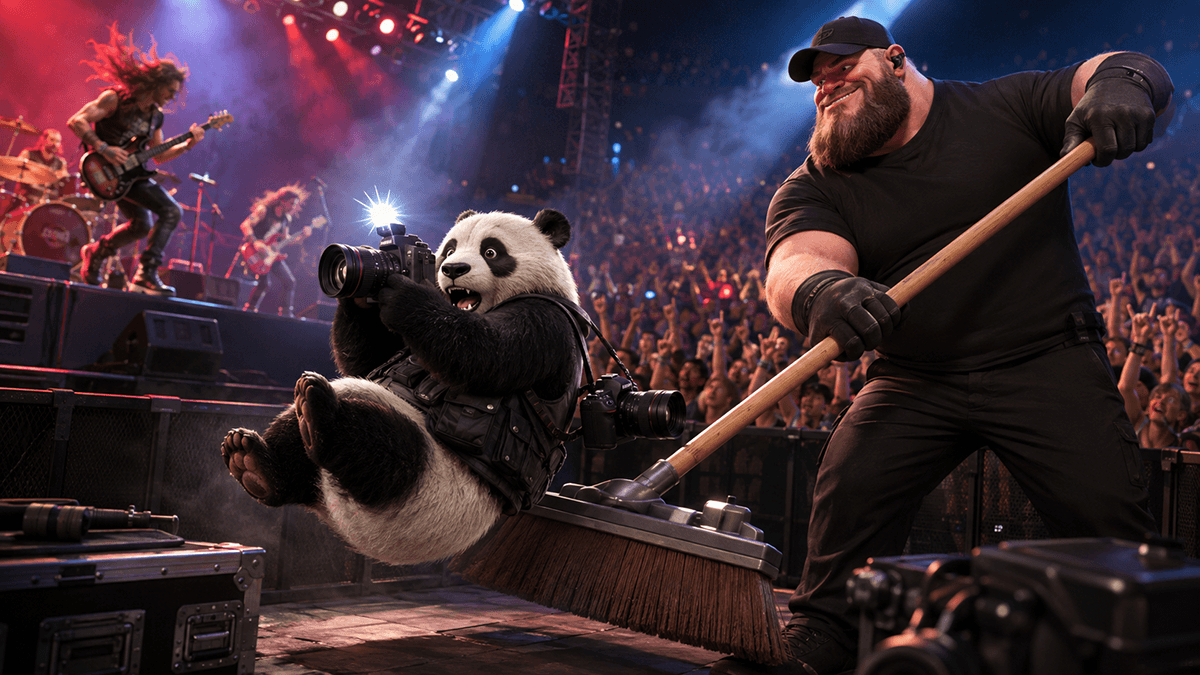
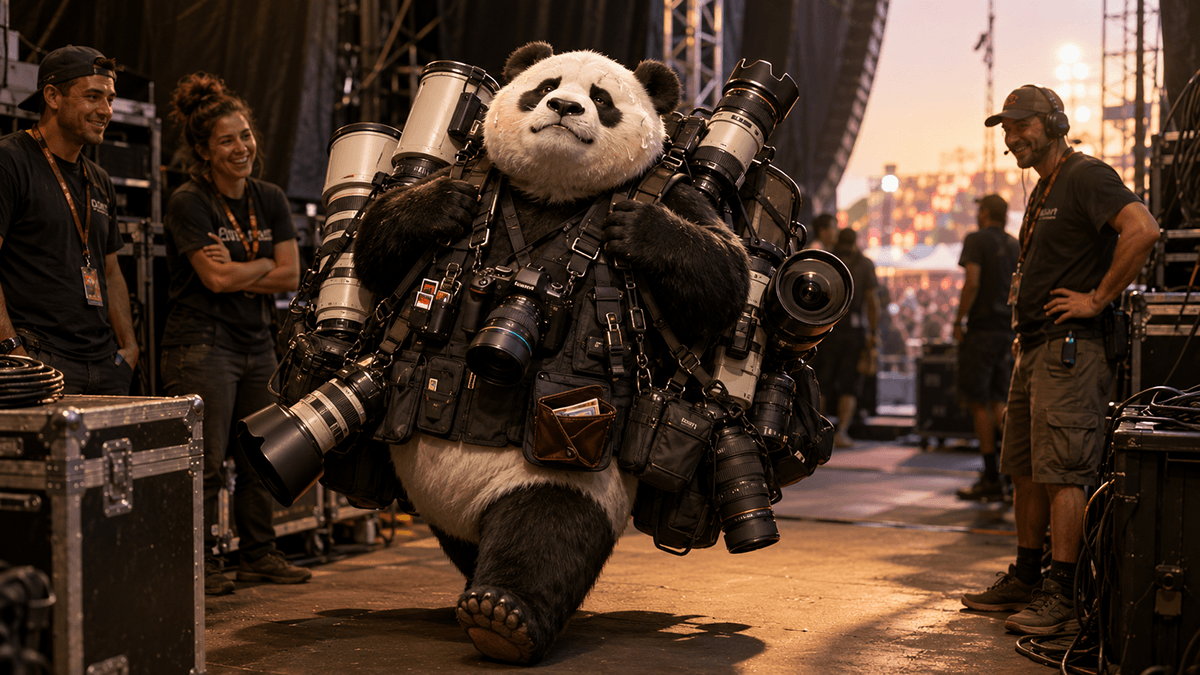
That is when you quickly discover that two camera bodies paired with 24–70 mm and 70–200 mm zoom lenses are something of a holy duo. An ultra-wide lens, such as a 12–24 mm, is extremely useful as well. Without the right focal-length range, it is difficult to capture the atmosphere, the energy of the whole band, individual portraits and details of the instruments within just a few minutes. As for the drummer, hidden somewhere in the darkness at the back of the stage, you can almost forget about them without a telephoto lens or permission to step onto the stage. Drummers are, sadly, the endangered species of concert photography.
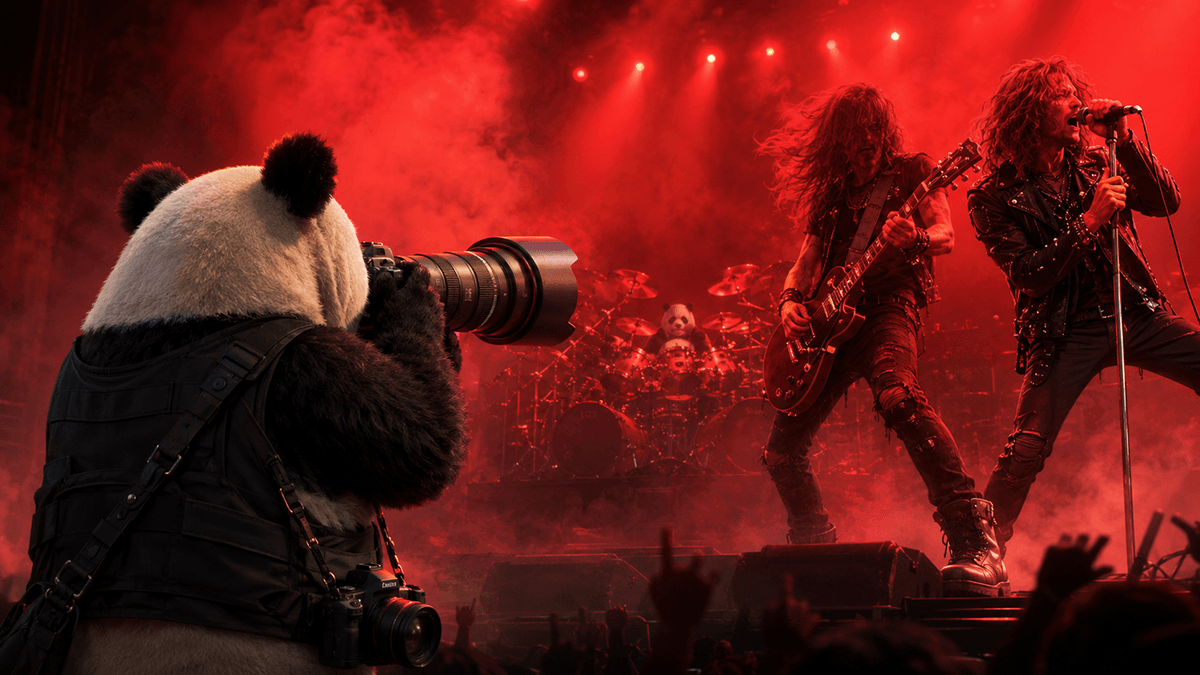
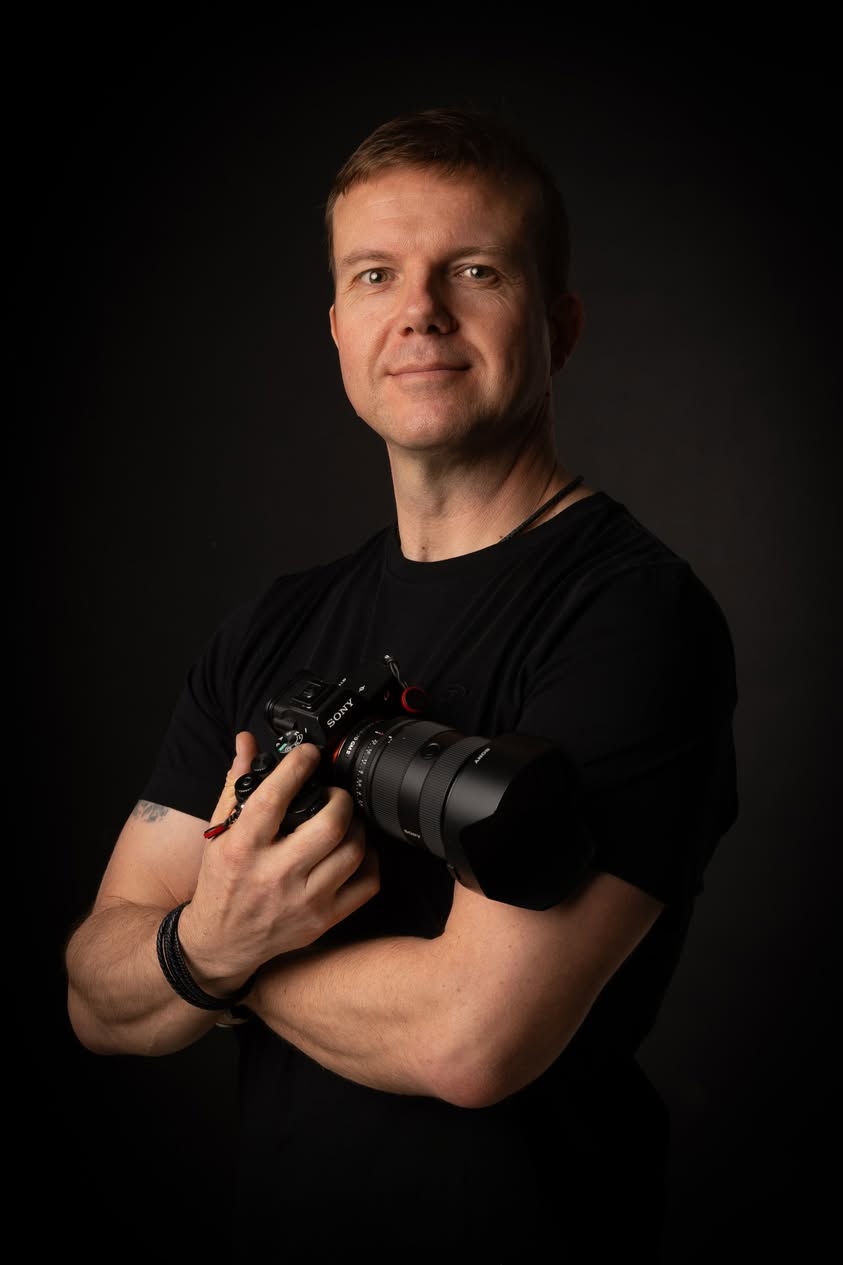
I currently use two camera bodies and four lenses. I have been shooting with Sony equipment for many years, largely thanks to the excellent long-standing relationship and support I have enjoyed from Sony’s official representative in Slovenia. My Sony A7R III is usually paired with a Sony 24–70 mm f/2.8 GM II, although I also use it with a Zeiss Batis 18 mm f/2.8 and a 16 mm f/2.8 fisheye. Its 42-megapixel sensor gives me plenty of room for more substantial crops in post-production. My second body, a Sony A7 IV, is permanently paired with a Sony 70–200 mm f/2.8 GM II. Because I rarely need to crop heavily at those focal lengths, its 33-megapixel sensor is more than enough for the job.
We should not forget the accessories either. I do not recommend the cheapest memory cards, because they can fail to keep up with burst shooting at the exact moment something unrepeatable happens on stage. They simply cannot swallow data fast enough—unlike a festival photographer, who can swallow dinner in three minutes between two sets. The standard neck straps supplied with cameras also become uncomfortable very quickly when you are covering a multi-day festival with two camera bodies hanging from your shoulders all day. I personally rely on Peak Design products, which have never disappointed me in terms of either comfort or quality. I also use their pouches for additional lenses; they are comfortable to carry, and their build quality has proved unquestionable.
So, does gear matter or not? Not necessarily, if you mainly shoot for your own enjoyment and do not need to meet a client’s specific requirements. But when your fee depends on delivering the result, some things become unavoidable whether you like it or not. Enthusiasm is wonderful, but unfortunately it does not offer a 200 mm focal length or focus reliably in the dark.
I would never advise photographers who are just entering the world of concert photography to sell a kidney and immediately buy every piece of equipment imaginable. Start where the rest of us started. Buy a used camera. I generally recommend a full-frame sensor because it tends to perform better in low light. Add a 35 mm f/1.8 lens, which you can find for a few hundred euros, and start exploring your local clubs. A prime lens will force you to move, improve your framing and think a little more before pressing the shutter. You will also discover fairly quickly whether concert photography is really for you. There is a good chance you will become addicted to it; if you do not, at least you will still have both kidneys and no cupboard full of unused lenses.
Then build your kit gradually. Move on to a 24–70 mm lens, add a 70–200 mm later, and eventually invest in a second camera body. With that setup, you will be ready for almost any concert venue—from a dark club stage to a major festival where the lighting designer has apparently decided that pure red is the most flattering colour for photographers.
Most importantly: keep shooting. Shoot as much as you can. Gear can make your job easier, but it cannot see the moment, choose the frame or press the shutter for you. Above all, enjoy every part of the process. If the joy is gone, not even a lens that costs as much as a decent used car will bring it back.
← This and that
28. 07. 2026
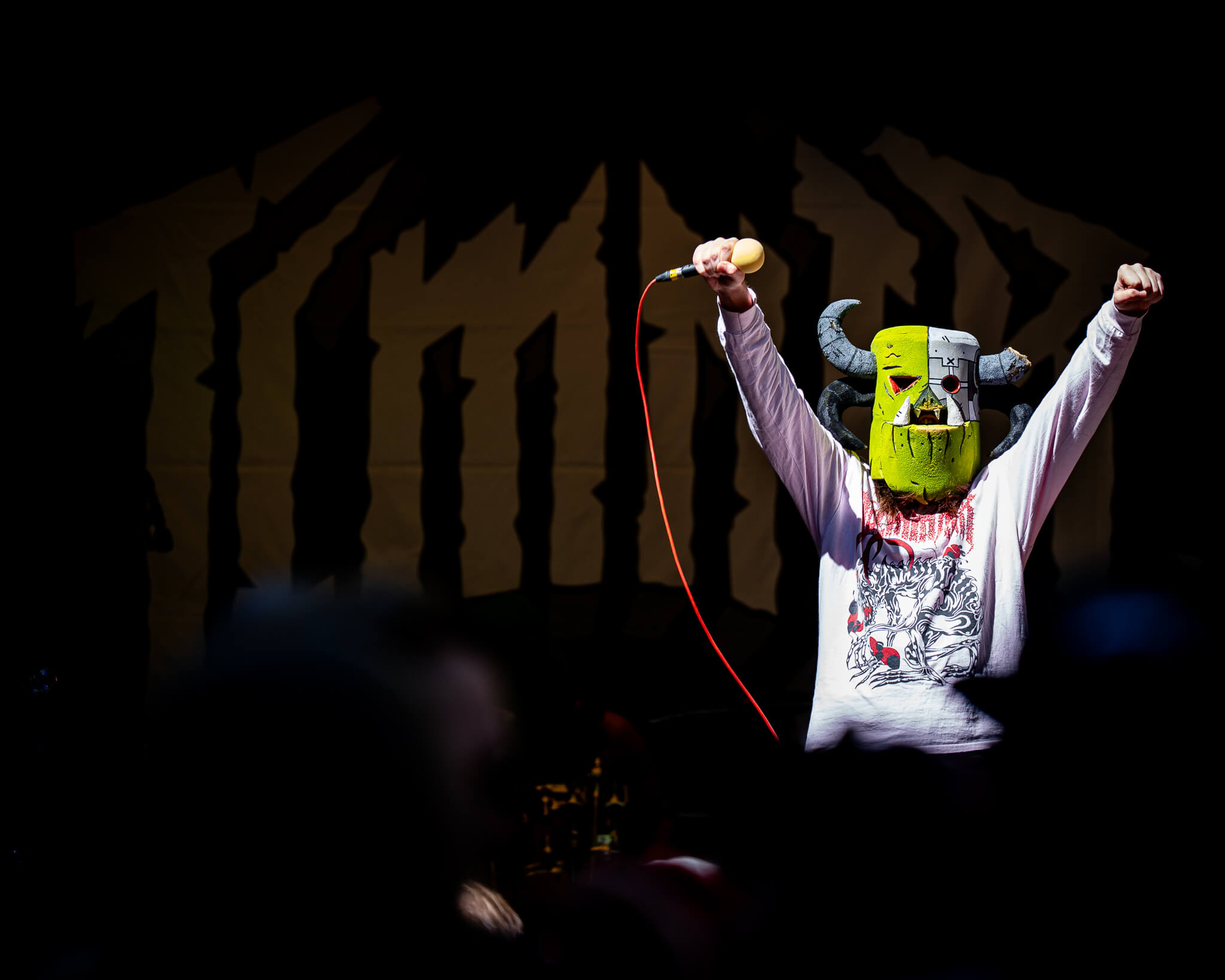
I survived Tolminator Festival 2026
...once again from behind the lens as an official festival photographer, capturing the music, madness and unforgettable moments along the way.
Tolminator 2026 is over. The post-festival blues are real – and this year, they have hit especially hard.
Why?
BECAUSE I HAD AN INSANELY GOOD TIME!
Despite the exhaustion, lack of sleep and my body occasionally reminding me that I am no longer exactly a wild sixteen-year-old, that is precisely how I felt. At a festival like this, the music, the madness, the people and the endless bursts of laughter give you the ultimate power-up. Sleep is overrated anyway. At least for those few days.
It was a huge pleasure and an honour to once again be part of the official festival photography team. A massive thank you to Matej Ahlin, Črt Batagelj and Robi Valenti for putting their trust in me. I sincerely hope I lived up to it. I certainly gave it everything I had – although, at times, it was difficult to tell whether the ground was shaking because of the music, the crowd or my completely exhausted legs.
It was incredibly good to meet old friends again and make so many new ones – both Slovenian and international. Hey, I even have an Australian friend on my list now! I honestly do not think I laughed as much during the entire year as I did here in just two hours. My facial muscles are now more sore than my legs.
So, what was the festival actually like?
In one word: insane.
The atmosphere on the beach was absolutely incredible. We only had bad luck with the weather for one day, and even then, it was hardly a disaster. At least the rain created some puddles that offered additional opportunities for chaos, sliding around and making highly questionable life decisions.
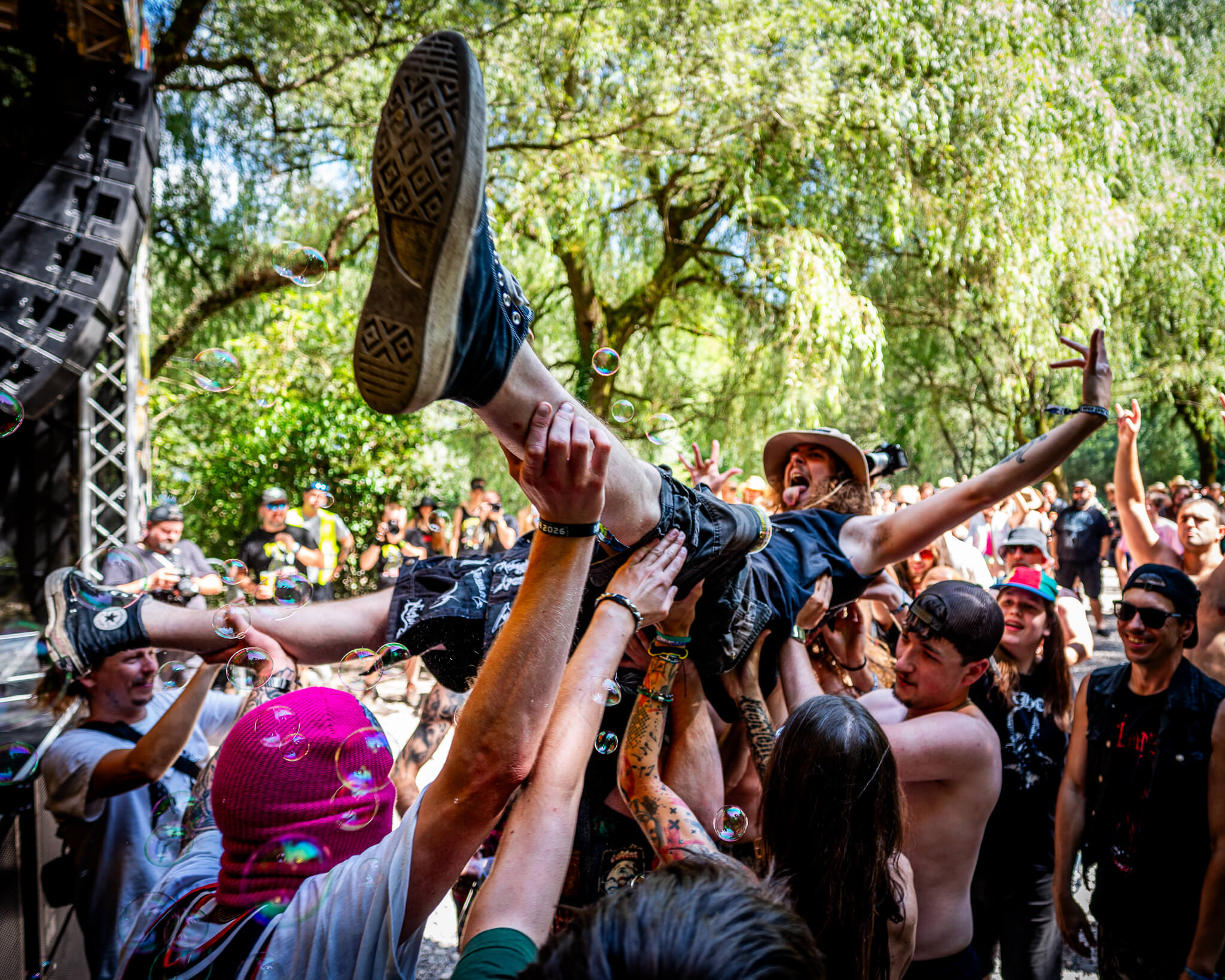
I discovered plenty of great new music and bands on the beach stage that I will definitely continue following. As always, the main stage was packed with established names that did not disappoint. But, as expected, the biggest madness once again happened at the DIY Stage.
What happens there simply cannot be properly described – you have to experience it. The connection between the musicians and the audience could hardly be more genuine. There is practically no boundary between the stage and the crowd. Common sense, meanwhile, simply waved goodbye somewhere along the way and said: “See you after the festival!”
There are tons of photos. Literally. I will probably keep posting individual bands, moments and scenes for quite some time – whenever I feel like it and provided I manage to reconnect with reality while going through them all.
Tolminator is not just a festival. It is a few days of complete escape, loud laughter, music, friendship and beautiful madness. It is a place where you forget about everyday worries, completely lose track of time and, for a few days, feel fully and completely alive again.
The 2027 edition has already been announced. The apartment is already booked.
Tolminator 2027 – the countdown has officially begun!
WE ARE STUPID, WE ARE DUMB …
BUT AT LEAST WE'RE HAVING FUN!
Podnapis sličic — klik za povečavo
Nadaljevanje zapisa. Odstavkov in vrstic sličic je lahko poljubno — povej in dodam.